The National Conference and Expo on Sustainable Mining and Ecological Restoration (NSMER) began on Sunday at the Indian Institute of Coal Management, Ranchi. It brought together policymakers, scientists, industry representatives and academics to discuss the future of sustainable mining in India.
The three-day conclave, held from May 10 to 12, is organised by Vijnana Bharati (VIBHA) Jharkhand in collaboration with the Central University of Jharkhand and several research institutions. The event is dedicated to pioneering geologist Pramatha Nath Bose, whose contributions to India’s geological and industrial development continue to shape contemporary thinking on mining and sustainability.
Advertisement
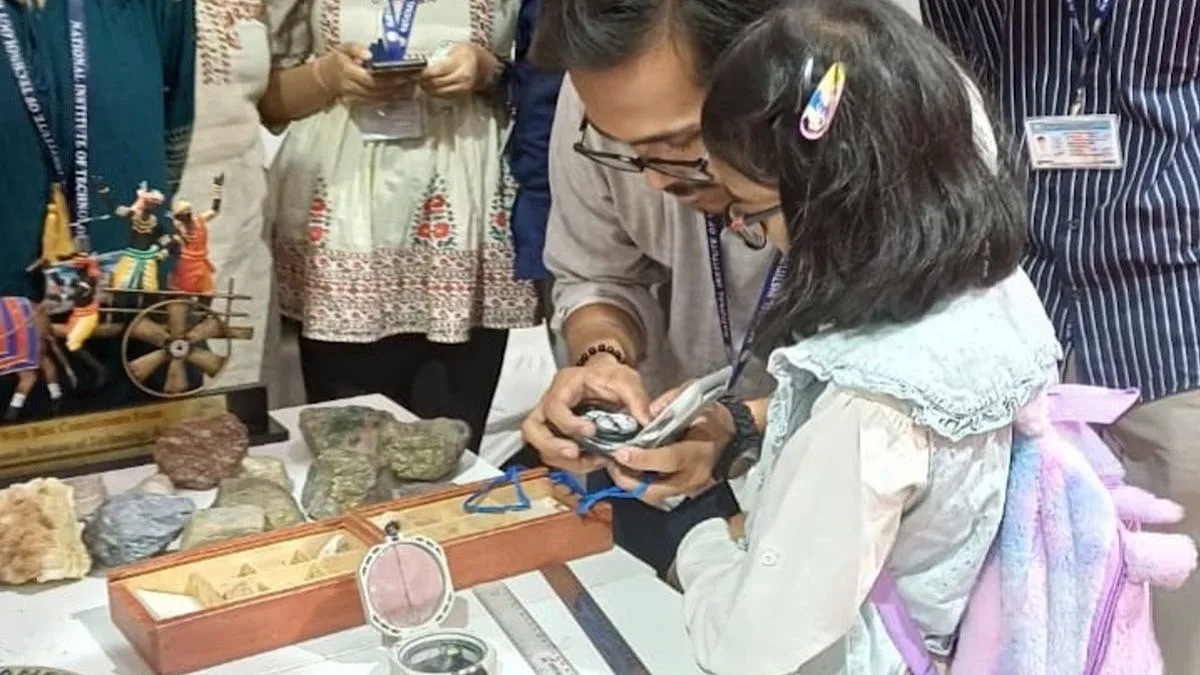
The opening day also featured an expo showcasing ISRO and defence-related exhibits. The exhibition was inaugurated by IIT-ISM Dhanbad director Prof Sukumar Mishra in the presence of several dignitaries.
Prof Sarang Medhekar, Vice Chancellor of the Central University of Jharkhand, said the conference was an opportunity to revisit Bose’s enduring legacy in the context of present-day environmental and developmental challenges.
“Central to this endeavour is the legacy of Pramatha Nath Bose, the pioneering geologist to whom this conference is dedicated,” Prof Medhekar said. “It is imperative to reflect on how Bose’s 19th-century vision serves as a blueprint for 21st-century sustainability.”
He said Bose understood early that India’s path to self-reliance was linked to the intelligent use of its natural resources. His geological surveys, particularly in Mayurbhanj, played an important role in identifying iron ore deposits that later helped lay the foundation of the Indian steel industry.
Prof Medhekar said the conference seeks to address a central contradiction of modern development: while minerals remain essential for infrastructure, technology and clean energy systems, extraction often leaves lasting ecological damage.
He said discussions at NSMER would focus on the transition to “Mining 4.0,” including the use of smart sensors, digital mapping and AI-driven exploration to reduce the environmental footprint of mining operations. At the same time, he emphasised that technology alone would not be sufficient without a serious commitment to ecological restoration.
“The other half lies in ecological restoration, the scientific process of healing the land post-extraction,” he said, adding that the goal should be to move beyond basic reclamation to the restoration of ecosystems and biodiversity.
A major attraction at the conference is the P. N. Bose Young Scientist Award, aimed at encouraging original research in sustainable geology and green mining. According to Prof Medhekar, the initiative is intended to inspire young researchers to see Bose not merely as a historical figure, but as a continuing source of scientific guidance.
He said the conference created a platform where representatives from the Ministry of Environment, Forest and Climate Change, Coal India, NML and academic institutions could jointly deliberate on a roadmap for sustainable development.
In his concluding remarks, Prof Medhekar said the conference was also a tribute to Bose on the eve of his 171st birth anniversary on May 12. He said India’s scientific future must be guided by duty towards land, people and ecological balance.